I’d Tap That Funny Golf: A Designer’s Review
As an embroidery designer who has spent countless hours digitizing, testing, and stitching out thousands of files, I have developed a keen eye for what works in the real world. We often see designs that look spectacular on a screen but fail miserably under the needle. Today, I am putting I d Tap That Funny Golf under the microscope. This isn’t just about whether it looks cute; it is about whether it holds up in a commercial or serious hobbyist environment. This piece falls squarely into the Sports category, but its appeal goes beyond the golf course, tapping into a broader market of humor-driven Embroidery enthusiasts.
First Impressions and Visual Personality
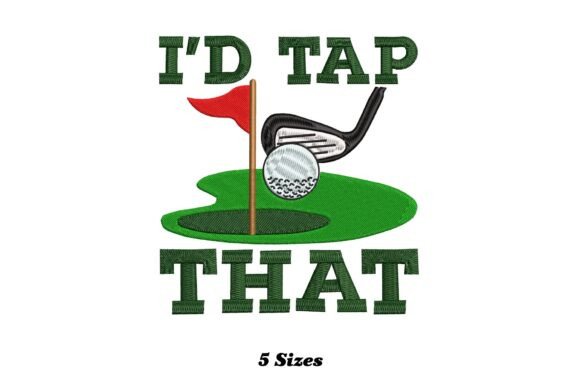
When I first loaded the preview of I d Tap That Funny Golf, the immediate reaction was one of amusement. The design relies heavily on wit rather than complex graphical realism. For a machine embroidery design, this is often a blessing. Complex photorealistic images require high stitch counts and dense fill stitches that can puckers fabric and break needles. In contrast, a humor-based design like this usually utilizes cleaner lines, bold lettering, and simple iconography.
The mood is lighthearted and quirky. It creates an instant connection with the viewer because it speaks a specific language—golf culture mixed with playful innuendo. Visually, the layout appears balanced, suggesting that the digitizer considered the flow of the thread. The visual personality is casual, making it a perfect candidate for items that are meant to be worn comfortably or displayed in relaxed home settings. It does not try to be formal; it tries to be memorable.
Real-World Application: The Custom Tote Test
To truly evaluate a design, you must imagine it on a physical product. Let us consider a common scenario for any Etsy seller or craft business owner: a custom embroidered tote bag. Canvas is a sturdy fabric, but it has a distinct texture. If I d Tap That Funny Golf uses too many tiny running stitches or lacks proper underlay, the canvas weave might show through, ruining the clarity of the joke.
In my mental simulation of stitching this onto a natural cotton tote, I look for boldness. The text needs to be thick enough to remain legible from a distance. If the design includes a golf club or ball graphic, those elements should use solid fill stitches or clean satin stitch borders to stand out against the textured background. A successful application here means the customer laughs when they see it in your online shop thumbnail, and they laugh again when they hold the finished product. That double-take is where value is created.
Apparel and Wearability
Moving from accessories to custom apparel, let us talk about sweatshirt embroidery. This is a huge market for humorous designs. A unisex crewneck sweatshirt provides a large, stable canvas. However, fleece and terry cloth can be tricky. If I d Tap That Funny Golf has high stitch density without proper stabilization, it will sink into the pile of the fabric. For this application, I would recommend using a tear-away stabilizer for stability during stitching and potentially a topping if the fabric is particularly plush. The result should be a crisp, raised look that feels premium, not stiff.
For t-shirts, the stakes are higher. Thin jersey fabric stretches. If the design is wide, it might distort after washing. A well-digitized file will account for this pull compensation. If you are selling these as small shop products, always test on scrap fabric first. Check how the thread colors interact with the shirt hue. Dark shirts need bright thread colors for contrast; light shirts can handle darker threads but may show shadows if the stitch density is too low.
Navigating Technical Challenges
While the concept is fun, practical execution requires caution. There are specific scenarios where I d Tap That Funny Golf might struggle. Small hoop sizes are the first concern. If the design includes fine details or small lettering, shrinking it to fit a 4x4 inch hoop could render the text unreadable. Always check the minimum recommended size before purchasing or using the digital embroidery file.
Textured fabrics and stretchy materials also pose risks. If the design relies on intricate satin stitch columns, they may twist on unstable fabrics. Curved surfaces, such as caps or hats, require special attention. Embroidering on a cap means dealing with a curved, multi-layered surface. If the design is too wide, it will wrap around the sides of the cap awkwardly. For headwear, ensure the design width fits within the standard front panel limits, usually around 2.5 to 3 inches tall and no more than 5 inches wide, depending on the cap style.
Another critical area is dense stitch areas. If the golf ball or club graphic is heavily filled, it can create a stiff patch on soft fabric. This affects the drape and comfort of the garment. For baby embroidery or delicate items, this design might be too heavy unless scaled down significantly or simplified. Always inspect the stitch count if provided, and if not, do a test run to gauge the weight of the final embroidery project.
Commercial Viability and Brand Consistency
For the commercial embroidery professional or the dedicated Etsy seller, consistency is key. Does I d Tap That Funny Golf fit your brand? If your shop specializes in elegant, minimalist wedding gifts, this quirky sports design might clash. However, if your brand voice is fun, approachable, and geared toward hobbyists or gift-givers looking for something unique, this design is a strong asset. It enhances buyer engagement because humor is shareable. People tag friends in social media posts when they see something funny, which drives organic traffic to your printable mockup or product listing.
Product value is also tied to presentation. A well-stitched version of this design on a high-quality towel or apron suggests attention to detail. It builds customer trust. When buyers see clean thread trims, no jumps, and vibrant thread colors, they perceive the item as handmade with care. This is crucial for differentiating your small shop product from mass-produced imports.
Designer Notes for Best Results
- Test on Scrap Fabric: Never skip this step. Use the same type of fabric you intend to sell.
- Check Thread Color Contrast: Ensure the text pops against the background. Use a color chart to plan your palette.
- Review Stitch Density: High density can cause puckering; low density can look cheap. Find the balance.
- Confirm Hoop Size: Make sure your machine can accommodate the design dimensions.
- Inspect Small Details: Zoom in on the preview. Are there tiny stitches that might break or bunch?
- Use Proper Stabilizer: Match the stabilizer to the fabric weight and stretch.
- Verify Licensing: Before selling finished items or using it in commercial projects, confirm the license terms of the digital embroidery file.
In conclusion, I d Tap That Funny Golf offers a charming update to standard sports-themed decor. It bridges the gap between niche hobby interest and broad comedic appeal. Whether you are embellishing t-shirts, towels, or home decor, the key lies in technical execution. By respecting the limitations of the fabric and the capabilities of your machine, you can turn this simple design into a standout bestseller. It is a reminder that in the world of Embroidery, personality sells just as well as precision.