Cowboy on Horseback: A Designer’s Review for Merch
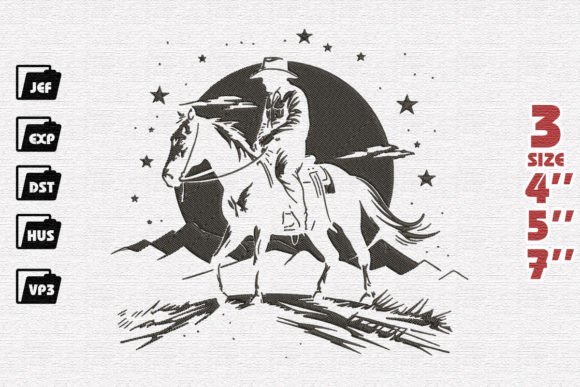
As an embroidery designer who has spent years digitizing files for small business owners, I approach every new machine embroidery design with a critical eye. It is not just about whether the image looks cute on a screen; it is about how that image translates into thread, how it holds up in the wash, and most importantly, how it serves the brand identity of the client using it. Recently, I reviewed the Cowboy on Horseback design, and I want to share my professional assessment of its potential for commercial use.
The product description promises to add a touch of charm to fabrics, positioning this as a cool embroidery design suitable for t-shirts, towels, home decor, or anything needing a fun and whimsical accent. From a branding perspective, this sets a specific tone. This is not a corporate, sterile logo. It is playful, rustic, and inviting. For small business owners in the boutique, café, or handmade goods sector, this visual personality can be a powerful asset.
Visual Personality and First Impressions
When I first loaded the Cowboy on Horseback file into my editing software, the immediate impression was one of approachable warmth. The subject matter—a cowboy on horseback—evokes themes of tradition, adventure, and Americana. However, the descriptor "whimsical" suggests that the digitizing likely avoids harsh, rigid lines in favor of softer curves and friendly proportions. This makes it an excellent candidate for brands that want to appear friendly rather than intimidating.
For a local bakery, a pet brand, or a family-oriented creative studio, this design offers a narrative element. It tells a story. In the world of small business merch, storytelling sells. Customers do not just buy a tote bag; they buy the feeling associated with the design. The rustic charm of a cowboy motif can elevate a simple cotton tote into a cherished accessory.
Real-World Applications for Small Businesses
The versatility of this digital embroidery file is its strongest selling point. I evaluated how it would perform across various common merchandise items used by Etsy sellers and local shops.
- Embroidered Patches: This is perhaps the most lucrative application. An embroidered patch featuring the Cowboy on Horseback can be sold as a standalone product or used as a value-add for clothing purchases. Patches allow customers to customize their own jackets or bags, increasing engagement.
- Apron Embroidery: For cafes, florists, or bakeries, staff uniforms are walking billboards. Stitching this design on the chest pocket of a denim or canvas apron adds a layer of professionalism and team unity. It signals to customers that the staff takes pride in their craft.
- Cap Embroidery: A smaller version of this design works well on the front panel of a baseball cap. However, due to the curved surface, careful attention must be paid to the stitch direction to prevent distortion.
- Tote Bag Design: Canvas totes are staples for boutiques. Placing this design centrally on a natural-colored canvas bag creates a high-contrast, eye-catching piece of custom apparel that customers will use repeatedly, extending brand visibility.
Beyond these items, consider using it for customer gifts. A small towel or handkerchief with this whimsical accent can serve as a memorable thank-you gift, enhancing customer loyalty.
Technical Considerations and Production Notes
While the aesthetic appeal is strong, any experienced embroiderer knows that technical execution is where projects succeed or fail. Before running a full production batch, there are several critical factors to review regarding this embroidery file.
First, check the stitch density. Whimsical designs sometimes rely on satin stitches for outlines. If the density is too high, it can cause puckering, especially on lighter fabrics like t-shirts. Conversely, if the density is too low, the fabric may show through, ruining the visual impact. Always test on the actual fabric you intend to use.
Second, consider the hoop size limitations. The product description does not specify exact dimensions, so you must verify the maximum hoop size supported by the file. If you plan to use this on a large tote bag, ensure the design scales up without losing definition. Pixelation is not an issue in embroidery, but jagged edges from poor scaling can be.
Third, evaluate the thread colors. A cowboy theme typically utilizes earth tones—browns, tans, creams, and perhaps a pop of blue or red. Ensure your thread inventory matches the intended palette. High contrast is key for recognition. If stitching on dark uniforms, you may need to adjust the color sequence or add an underlay to make the design pop.
Finally, always use the correct stabilizer. For stretchy fabrics like t-shirts, a cut-away stabilizer is often necessary to prevent the design from distorting over time. For woven fabrics like canvas totes or aprons, a tear-away may suffice, but testing is essential.
Strategic Branding and Customer Trust
Integrating Cowboy on Horseback into your product line does more than decorate an item; it strengthens your brand identity. Consistency is crucial. If your brand voice is playful and rustic, this design aligns perfectly. It creates visual consistency across different products, from patches to aprons.
Furthermore, high-quality embroidery signals value. A poorly stitched logo can damage trust, but a clean, well-executed design enhances the perceived quality of the finished product. When customers see precise stitching and thoughtful design placement, they associate those qualities with your business as a whole.
For online sellers, creating a printable mockup or a digital composite showing the design on various items can significantly boost conversion rates. Show potential buyers how the design looks on a cap versus a tote. This helps them visualize the utility and style, reducing hesitation.
Where to Use Caution
Despite its charm, this design is not suitable for every application. Avoid using it on items that require extreme durability in high-friction areas unless reinforced. Also, be cautious with very small sizes. Intricate details in the horse’s mane or the cowboy’s hat may merge together if scaled down too much for a tiny lapel pin or small tag. Always stitch out a test sample at the smallest intended size to check for clarity.
Additionally, consider the fabric texture. Highly textured fabrics like thick wool or terry cloth towels can obscure fine details. On towels, the loops of the fabric might swallow smaller stitches, making the design look muddy. In such cases, increasing the stitch length or simplifying the color palette might be necessary.
Final Verdict for Commercial Use
The Cowboy on Horseback design is a versatile asset for small business owners looking to add personality to their merchandise. It bridges the gap between professional presentation and whimsical charm. However, success depends on proper preparation.
- Verify the commercial licensing terms before selling products made with this file.
- Test the design on your specific fabric types with appropriate stabilizers.
- Check the stitch count and density to ensure it suits your machine’s capabilities.
- Create mockups to market the design effectively to your audience.
By treating this design asset with the technical respect it deserves, you can transform a simple embroidery pattern into a powerful tool for brand growth and customer engagement. Whether you are stitching aprons for a local café or creating patches for an Etsy shop, this design offers the rustic appeal that modern consumers crave.